At our office, we’re doubling down on red light therapy—and honestly, it’s because we can’t ignore the results we’re seeing. We’ve watched people transform not only the way they look, but how they feel. So whether you’ve never heard of red light before or you’re curious to go deeper, let’s walk through the power, science, and strategy behind it.
## What is Red Light Therapy?
Think of red light as sunlight’s smarter, safer cousin. While sunlight carries a full spectrum of wavelengths—including UV rays that can damage the skin—red light specifically isolates therapeutic wavelengths without the harmful side effects.
Red light therapy uses focused red and near-infrared wavelengths to stimulate healing and improve cellular function. In short, we’re using light to activate the power sources in your cells: the mitochondria.
## Why Mitochondrial Health Matters
Every cell in your body contains a mitochondrion—a tiny energy factory. When your mitochondria are underperforming, everything from your metabolism and recovery time to your mood and hormonal balance is affected.
Red light therapy charges those little batteries back up in a safe, non-invasive way.
## The Visible Benefits: Fat Reduction and Skin Tightening
In our office, red light therapy isn’t about hype—it’s about results. One area where clients see incredible changes is fat loss and skin tightening. Here’s how it works:
– Red and near-infrared wavelengths penetrate up to 8mm deep into the skin.
– This heat triggers liquefaction of stored fat inside the fat cells—including toxins, cholesterol, and triglycerides.
– The fat cell membrane weakens, allowing these contents to drain out, naturally eliminating through urine, sweat, and bowel movements.
– The fat cells shrink significantly—down to raisin-sized—without damaging surrounding tissue.
You don’t just drop inches—you do it while preserving healthy tissue, avoiding spot-reduction gaps, and improving how your skin looks and feels.
## Skin Firming on the Inside
We’ve seen the scans: clients using red light therapy during weight loss look more toned and tight—not saggy and deflated. It works by:
– Stimulating collagen and elastin production
– Helping your skin tighten as fat cells shrink
– Preventing the loose-skin effect that often comes after significant weight loss
In fact, some of our happiest clients are using red light alongside GLP-1 medications or their own weight loss plans. It adds the sculpt and firmness that diet alone often can’t provide.
## Real Results, Real People
From reducing stubborn “saddlebags” to smoothing out back bulges before a wedding, we’ve seen dramatic aesthetic improvements. One client even looked like she had a professional butt lift after a series of sessions—and she couldn’t wait to hit the beach.
But beyond the visual changes, what moves us most are the emotional shifts: watching someone regain confidence, reimagine their body, and fall in love with what’s possible.
## Let’s Talk Truth: It’s Not a Magic Wand
If you’ve seen promises that “laying on a red light bed will melt fat while you eat pizza,” we’re here to tell you—that’s just not true.
Red light therapy is incredibly effective, but it’s part of a system:
* You’ll still need to support your liver and lymphatic system with healthy choices.
* High-carb, high-sugar diets can undermine the fat-removal process.
* Consistency matters. One session won’t undo years of poor habits.
We guide our patients with personalized nutrition, movement, and wellness strategies that complement the red light to achieve actual, last-lasting change.
## Not All Red Light Is Created Equal
Be cautious of the $50 Amazon devices. While they might provide mood-boosting light or surface-level benefit, they don’t go deep enough—literally or scientifically—to shrink fat cells or trigger significant collagen production. The FDA-cleared devices we use are powerful enough to yield measurable results because they work with precision settings for fat loss, pain relief, circulation, and skincare.
## What a Red Light Program Looks Like
Most clients need a minimum of 8 sessions, done consistently—usually twice a week for four weeks. We begin with a 3D body scan that analyzes everything from body fat percentage to volume distribution. With each session, we track data, adjust your protocol, and align our recommendations with your aesthetic and health goals.
Some spots take a little more targeted effort—back areas, thighs, or love handles—but with the right plan, we often see dramatic changes by session 16.
## Final Thoughts: This is a Partnership
We tell every client: red light therapy works, but not without your participation. This isn’t a one-and-done miracle—it’s an empowering tool that supports major body and mindset shifts when combined with coaching, intentional nutrition, and aligned lifestyle choices.
We’re here to help you get the best possible results—but you do need to show up. And we promise it will be worth it.
If you’re interested in learning more about our red light therapy program and whether it’s the right fit for your goals, reach out to our office. We’d love to talk with you, answer your questions, and help you take your next step toward feeling and looking amazing.
The United States is currently experiencing widespread air quality alerts due to smoke from hundreds of wildfires in Canada. Skylines from Maine to Maryland to Minnesota are gray and smoggy, and in some places, people are being advised to stay indoors. To understand what’s happening and why, we spoke with Peter De Carlo, an associate professor in the Department of Environmental Health and Engineering at Johns Hopkins University.
According to Professor De Carlo, there are a couple of factors contributing to the current situation. The first is the dry weather in both Canada and the US, which has created ideal conditions for wildfires to spread. The second is the weather patterns, which are channeling the smoke from Canada through Pennsylvania into the Mid Atlantic and Northeast regions of the US.
But what makes this smoke harmful? The answer lies in particulate matter, which are tiny particles smaller than the width of a human hair. These particles can enter the lungs and cause a range of health problems, including respiratory and cardiovascular issues, as well as neurological effects.
The current levels of particulate matter in the air are well above what is considered safe. In Baltimore, for example, the levels are reaching 150 micrograms per meter cubed, which is more than ten times the annual average and four times higher than the recommended 24-hour average. This high concentration of particles can have serious consequences for vulnerable populations, such as children, the elderly, and those with preexisting health conditions.
In response to the poor air quality, some cities, like New York, are taking precautions by canceling outdoor activities. This is especially concerning for parents and children, who may have been looking forward to enjoying the summer weather. But according to Professor De Carlo, the situation may improve as the weather patterns change and the smoke moves away from the affected areas.
Unfortunately, this type of air quality issue may become more common in the future due to the impacts of climate change. As the fire season starts earlier and lasts longer, and as we see more frequent and severe wildfires, we can expect to experience more widespread air quality alerts and health concerns.
In conclusion, the current air quality alerts in the US are a result of a combination of dry weather and specific weather patterns that are channeling smoke from Canadian wildfires into the country. The high levels of particulate matter in the air can have serious health consequences, particularly for vulnerable populations. Climate change may make these types of events more common in the future. It is important for individuals and communities to stay informed and take precautions to protect their health during times of poor air quality.
Timing is everything.On Tony Robbin’s Podcast they interviewed Daniel Pink, author of When: The Scientific Secrets of Perfect Timing. Daniel describes 3 phases of productivity that we all experience throughout a day:
Peak, Trough and Recover.
Peak – Do analytic work.
Trough – Do administrative work.
Recovery – Do creative work.
Besides walking through when to have lunch, benefits of a 20 min nap, and when students should take standardized test the other most interesting info to me was figuring out your chronotype (Lark, Owl, or Third-bird). I’m a Third-bird (or Intermediate), you can figure out your chronotype HERE with a questionnaire that takes about 10 min.
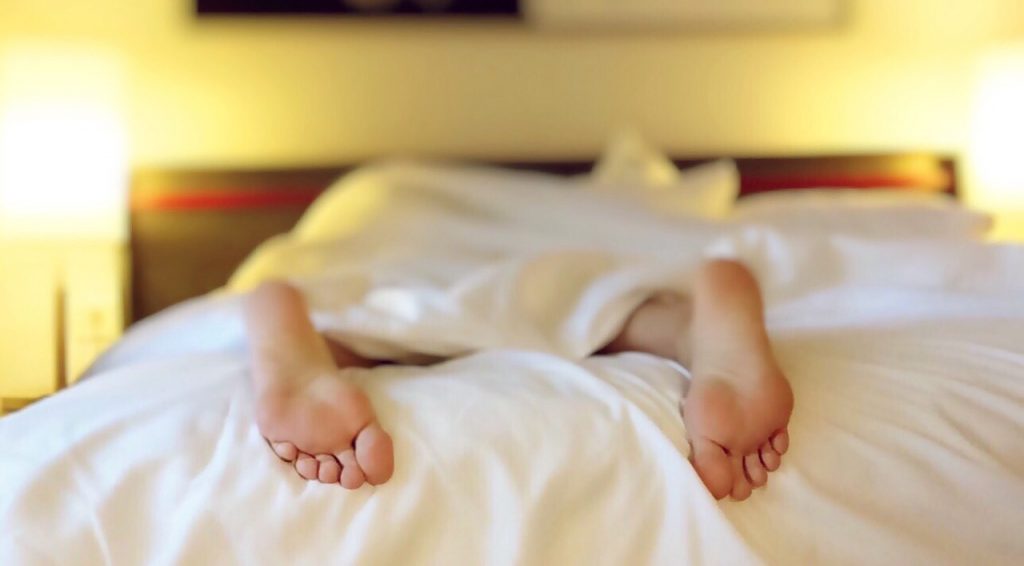
If you’re like me, you don’t always (okay, usually) don’t get anywhere near the ideal amount of sleep through the week. I would consider myself more of a night owl and tend to burn the candle at both ends and so when Sunday morning comes around – let me sleep in. Insert kids – and this usually means maybe an extra hour or two longer than usual but I take it when I can. Some recent research looked at whether catching up on sleep during the weekend offset a deficit that most of us get during the week. Spoiler Alert – sleeping in on Sat and Sun doesn’t help (enough).
The researchers divided people into 3 groups over a week long period:
Control Group – 9 hours of sleep per night for the whole time.
Sleep Deprived – 5 hours of sleep per night for the whole time.
Weekend Recovery – 5 hours of sleep Mon – Fri, as much as the wanted on the weekend (could even nap)
My idea when I started reading would be that the recovery group would actually make up for some of the lost time and that would make a significant health improvement. Wrong!
Weight gain was almost identical for the people that stayed sleep deprived and those that tried to catch up.- Both were higher than group that got enough sleep.
In some ways, weekend recovery sleep resulted in worse outcomes than continued sleep loss. For example, weekend recovery sleep led to greater deterioration in insulin sensitivity.
Melatonin rhythms in the weekend recovery group were disrupted by over 1.4 hours the following Monday – which means you’re going to have trouble falling asleep and not get great sleep.
We’re all going to have periods through the year that we have big project and deadlines which results in less sleep. It’s just gonna happen. This also doesn’t mean you shouldn’t try to make up for periods of lost sleep but does show that it’s going to be a process and sleep deprivation (in this study was 5 hours of sleep vs 9 hours which was optimal) is really bad for your health long term. I’m more of a 6 hours per night and this was a real wake up call that I can’t catch up on the weekend to make up for staying up late during the week working. I’m a lot more dedicated to making sure I get more sleep and the sleep I get is the most kick-ass sleep I can get. Here’s what I’m doing to help:
Not wearing shades in the morning. I’m stuck inside most of the day so when I do get outside I want my eyes and brain to see that time of day it is so the right circadian hormones will get released when they’re supposed to.
I’ve been wearing blue light blockers almost every day during the day and definitely in the evening if I’m on a screen. I’ve actually noticed a significant change in eye strain due to this.
Keeping the house cool at night, 65-67 degrees.
Totally dark in the room. This was a game changer for me; we got black out curtains and once I got a taste of the darkness I became obsessed with making sure our room was totally dark. This also means limiting clock lights, night lights, everything.
I’m only drinking coffee first thing in the morning and not in the afternoon anymore. In fact, I’ve been trying to cut back on caffeine and have been doing more MudWtr in the mornings than coffee- the reason being- coffee has a half life of 12 hours (if you’re lucky) which means if you have that 3pm espresso, you’ve still got half the caffeine in your system at 3am.
Supplement with a good quality methylated B vit through the day, 4-500 mgs magnesium through the day, 50 mgs 5HTP before bed. This is a common example of what I would recommend to someone but each person is different so consult with your health care provider before starting any new health regimen/ supplement.
After your typical long and frigid Ohio winter, my motivation and energy was at an all-time low by the end of February! As someone who is typically a get-up-and go/early bird, I suddenly found myself staying in bed and hitting “snooze” on the alarm clock unusually more and more often and that turning into a domino effect of no motivation throughout my entire day! Luckily, at the start of March I was driven to implement some sort of new mission in my daily routine that boosts my energy and kick-starts my day, because as the saying goes, “nothing changes, if nothing changes.”
I listened to an awesome TED Talk by Matt Cuttswho discusses his effort to try something new for 30 days every single month. It can be a new skill/hobby, diet, exercise, book series…or in Matt’s case, something unique, like a new instrument or meditating. Something to feed your creative side, achieve a goal, and in return have something to look forward to day to day or month to month…just for you! I decided this would be my strategy to beat the winter rut I was in.
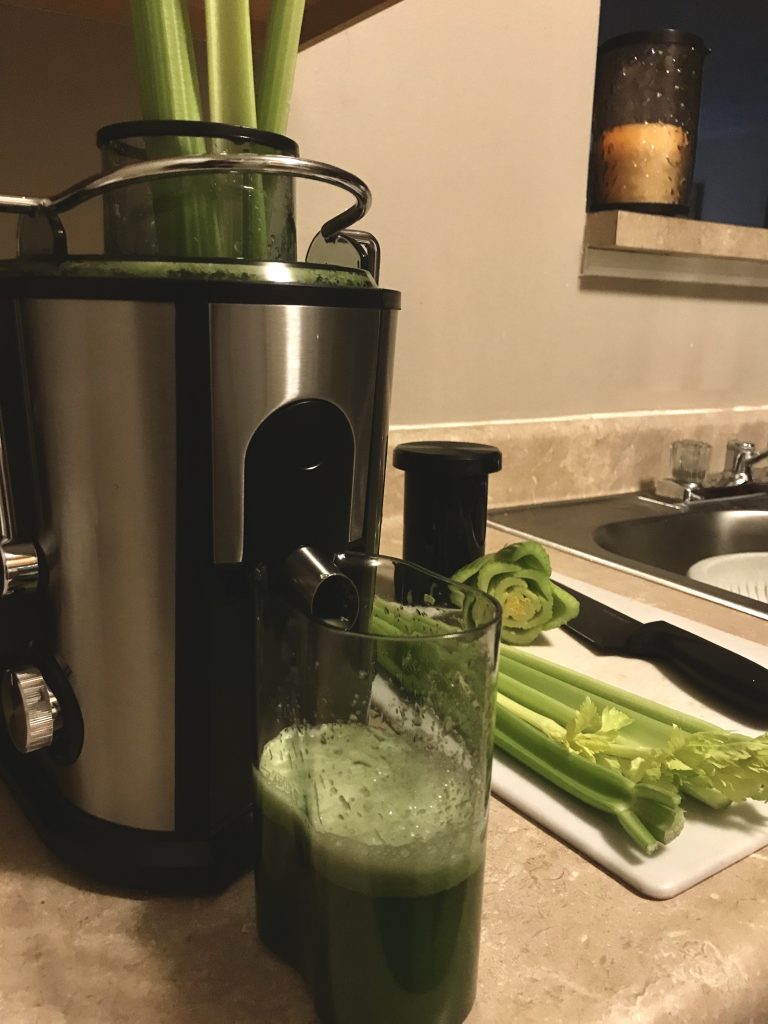
AM CELERY JUICING – Celery Juicing is the latest craze that I’ve been hearing about that’s been recently taking over social media…it peaked my curiosity!
Benefits: gut healer, acid reflux support, promotes hydration, concentrated essential vitamins, lowers cholesterol/blood sugar, fights inflammation/calcification, promotes weight loss, skin clearing benefits (acne, rosacea, etc.), migraine relief, and so many others!
Tools: Electric Juicer (Purchased from Amazon: AICOOK Juice Extractor – Model GS-336…affordable & easy to use) OR Blender (if you’re using a blender, a nut –milk bag would be required for draining juice).
Instructions: Prepare morning of / No advance prepping Wash celery Run celery through juicer – 1 Head of Celery / 16 oz. (You may gradually work your way up from 8 oz to 16 oz from after week one). Drink on empty stomach To save time I quickly rinse/clean equipment immediately after use and let the pieces air dry on a towel for the day.
MY EXPERIENCE – I’m now starting week #3 of consistent AM Celery Juicing and can report the following: 1 – WEIGHT: I’ve lost 4 lbs. and have consistently noticed loss of bloat everyday/all day. 2 – SKIN: I struggle with sensitive skin and have recently become prone to redness & breakouts. I experienced a major skin flare-up during the end of week #1 of celery juicing, which is a sign of detoxing! Now, at week three I see a little bit more balanced tone on my face, less dryness, and my forehead has cleared up! 3 – CRAVINGS/HANGRY: Dinner is always at the forefront of my thoughts and day. You can count on my sweet tooth convincing me to have a late night snack too, however, since starting the celery juicing I’ve found a huge curb in cravings and being much less adamant about what I want to eat and when. 4 – ROUTINE/ACCOUNTABILITY: I think how you start your day determines your entire day. To wake up every day with a specific intention and task boosts productivity and your spirit! Seeing such immediate results in my energy levels and bloat made me feel even more committed to continue celery juicing every morning with no complaints. It officially feels like a normal part of my morning routine! 5- ENERGY: I’m waking up more energized and alert in the morning! Typically, I drink one cup of coffee in the morning and one in the afternoon after my lunch. Within the first two days of my morning celery juicing I stopped thinking about that PM caffeine pick-me-up and gradually noticed the afternoon slump/wall was no longer. I’m now happily sipping my one cup of coffee a day thirty minutes – hour after my AM celery juice!
Let me know if you’ve tried celery juice in the morning or what your favorite juice is?
MYOFASCIAL MASSAGE
Myofascial release helps reduce muscular tightness and tension. It can help you improve your flexibility when recovering from an injury or dealing with chronic pain. Myofascial release massage therapy improves mobility and reduces discomfort.
CRANIAL SACRAL MASSAGE
This type of massage can reduce stress in the head, neck, and back and improve your overall mental and physical wellbeing. It can also increase mobility in these areas of the body.
REFLEXOLOGY
During a reflexology massage, our massage therapist will apply pressure to specific parts of your hands and feet. These points can affect multiple different areas of your body allowing the therapist to address issues without working directly on the area. This massage is great for reducing pain and stress caused by a variety of factors.
LYMPHATIC DRAINAGE/ POST-SURGERY
Lymphatic drainage massage is crucial post-surgery to help your body rid itself of toxic fluids and reduce swelling. Our lymphatic drainage massage can keep your skin looking more youthful and help your body heal itself as well.
DEEP TISSUE MASSAGE
Our deep tissue massage applies various levels of pressure slowly and strategically to reach deeper levels of muscle. It’s known to help with injury recovery, persistent muscle pain, and posture issues.
SPORTS MASSAGE
Sports massages are a great way to heal parts of your body that are overused or stressed and improve overall athletic performance. Our massage therapist will cater your massage based on your sport or activity of choice.
PRENATAL MASSAGE
We offer prenatal massages for expectant mothers, specially designed to alleviate uncomfortable side effects like back pain and swollen joints. By sharing your pregnancy symptoms, we can tailor the experience to your needs.
THERAPEUTIC MASSAGE
Therapeutic massage is a general discipline that helps alleviate pain, stress, and heal specific issues.
RELAXATION MASSAGE
Our relaxation massage helps with increasing relaxation, reducing tension, and improving your range of motion. This type of massage is a great option if you’re looking for a little rest and relaxation from a hectic schedule.